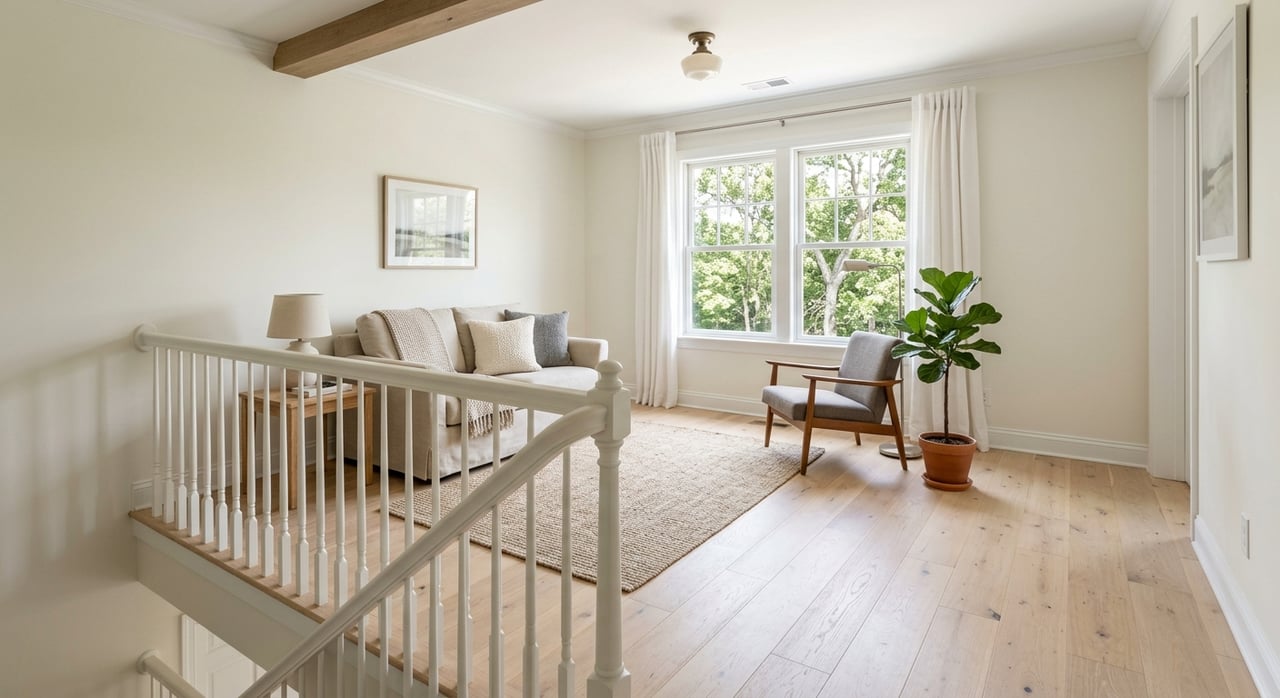
If your current home is starting to feel a little tight, you are not alone. As your household grows, the home that once felt just right can suddenly feel short on bedrooms, storage, yard space, or daily function. If you are thinking about moving up in Hurricane, WV, this guide will help you understand the local market, what to plan for financially, and what to check before you make your next move. Let’s dive in.
Why move up in Hurricane
Hurricane offers a mix of small-city convenience and everyday amenities that make staying local appealing. Census QuickFacts estimates the city’s 2025 population at 7,367, up from 6,961 in 2020, with 2,914 households and a 67.3% owner-occupied housing rate.
That matters if you are hoping to move into a larger home without leaving the routines you already know. The city also has a median owner-occupied home value of $210,500, median household income of $71,167, and an average commute of 24.8 minutes, which helps paint a picture of a community where many households may eventually need more space.
Hurricane lifestyle supports growing households
Moving up is not only about square footage. It is also about how your next home supports your day-to-day life, including commute, recreation, and access to local services.
Hurricane’s parks and recreation amenities are a practical plus. The city’s parks pages list City Park, Bridge Park, and Valley Park, along with walking trails, fishing access, sports fields, a sprayground, a skatepark, pickleball courts, baseball and softball fields, and an all-inclusive playground.
For many buyers, those details help justify staying in Hurricane instead of moving farther away. You may be able to gain space at home while keeping the places you already enjoy as part of your weekly routine.
What the Hurricane market looks like now
If you are planning a move-up purchase, preparation matters. Recent market snapshots suggest Hurricane remains competitive, which can affect both how you sell your current home and how quickly you need to act on the next one.
Realtor.com’s May 2026 summary showed 99 homes for sale, a median listing price of $313,387, and median days on market of 28. It also reported homes selling for about 3.13% below asking on average while still labeling Hurricane a seller’s market and a very hot market.
Redfin’s Hurricane market page tells a similar story, even though the numbers differ. It reports homes selling in about 42 days, many receiving multiple offers, and some hot homes going pending in around 4 days.
The big takeaway is simple: inventory is not especially deep, and buyers need a plan. If you are selling and buying at the same time, timing and preparation become even more important.
Price ranges can create move-up options
One helpful part of Hurricane’s market is that it is not one flat price point. Realtor.com’s neighborhood table showed listed subareas ranging from $114,900 in West Side to $275,000 in South Hills.
That does not guarantee what any specific home will cost, but it does support the idea that moving up locally can mean different things. You may be looking for more bedrooms, a larger lot, a different layout, or a home in a part of town that better fits your current needs.
How to know if you can afford to move up
A move-up purchase usually starts with two numbers: what your current home may sell for and what monthly payment feels comfortable on the next home. Both deserve a close look before you start touring properties.
Your available equity depends on your likely sale price, your mortgage payoff, and selling costs. If you have owned and lived in your home for several years, the IRS says the main-home sale exclusion may allow you to exclude up to $250,000 of gain, or up to $500,000 for joint filers, if you meet the ownership and use tests.
In general, that means owning and using the home as your main home for at least 24 months out of the last 5 years. For many move-up sellers, that can make a real difference in how much proceeds are available for the next purchase.
Mortgage rates still matter
Even if home values line up with your goals, financing can change the picture quickly. A larger home usually brings a larger payment, and even a modest rate change can affect what feels realistic each month.
Freddie Mac reported a 30-year fixed average of 6.47% and a 15-year fixed average of 5.81% as of June 18, 2026. That is why it helps to run payment scenarios early, especially if you are comparing a larger home, a different loan term, or a bigger down payment.
Get preapproved before you shop seriously
In a competitive market, preapproval is one of the best ways to shop with confidence. It gives you a clearer price range and helps you move faster when the right home hits the market.
The CFPB recommends getting at least three preapprovals and comparing at least three loan offers. It also notes that a preapproval letter is not a guaranteed loan offer, so you should wait for official Loan Estimates before choosing your lender.
For a move-up buyer, that means you can start the financing conversation early without feeling locked in too soon. It is a smart way to stay flexible while still being ready to act.
Sell first or buy first?
This is one of the biggest questions for growing households. The right answer depends on your finances, your comfort with overlap, and how much flexibility you have on timing.
Selling first can give you a clearer budget and access to proceeds from your current home. Buying first may help you avoid moving twice, but it can add pressure if you are carrying two housing payments or trying to line up both closings closely.
In a market like Hurricane, either path can work. The key is having a clear plan for your sale proceeds, preapproval, moving timeline, and what you will do if your next home appears before your current one closes.
Budget for more than the down payment
Many buyers focus on the down payment and monthly mortgage, but move-up costs often go beyond that. Planning for the full picture can help you avoid surprises at closing.
In West Virginia, the real estate transfer excise tax is $1.10 for each $500 of value, plus a $20 fee when the deed is recorded. You will also want to plan for inspection costs, lender fees, and the other usual closing expenses that come with buying and selling.
If you are keeping your current home instead of selling it, there may be additional tax considerations. The West Virginia Tax Division defines Class II as owner-occupied residential property and Class IV as property inside a municipality that is not Class II, so a former primary residence would not keep the same classification once it is no longer owner-occupied.
Local checks to make before you offer
When you are buying a larger home, it is easy to focus on the house itself and overlook the practical details around it. In Hurricane, a few local checks deserve extra attention.
Confirm school attendance zones
Putnam County Schools serves the area and uses attendance zones. The district lists Hurricane High, Hurricane Middle, and several nearby elementary schools, and its zoning information says boundary disputes are resolved by the superintendent using the official map, with out-of-zone permission possible when classroom space is available.
That means you should confirm the exact school assignment early rather than assume based on a general area or listing description. This is especially important in a compact city where several schools may serve nearby streets.
Review your commute
Census QuickFacts lists the average commute in Hurricane at 24.8 minutes. That may sound manageable, but your personal drive time can still change meaningfully depending on where your next home is located and how often you travel.
Before you make an offer, think through your weekday rhythm. A larger home may be worth it, but it still needs to fit the way you actually live.
Compare nearby amenities
Parks, trails, sports fields, and recreation spaces can shape daily life more than many buyers expect. Hurricane’s system includes City Park and Bridge Park, with features such as playgrounds, picnic areas, walking and jogging trails, fishing access, youth football space, disc golf, and courts and fields for multiple sports.
If staying close to these amenities matters to your household, include that in your home search criteria. The right move-up home should support your lifestyle, not just your storage needs.
A simple move-up game plan
If you want to move up in Hurricane without feeling overwhelmed, keep your process simple and focused. A clear plan can help you make steady decisions in a fast market.
- Estimate your current home’s likely sale value.
- Review your mortgage payoff and likely selling costs.
- Talk with lenders and compare preapprovals.
- Set a monthly payment range that feels comfortable.
- Identify your must-haves in the next home.
- Verify local details like school zones, commute, and amenities.
- Build a timing plan for selling and buying.
Final thoughts on moving up in Hurricane
Moving up can feel like a big leap, but it often starts with a simple question: does your current home still fit your life? In Hurricane, the answer may be yes for your location but no for your layout, storage, or long-term space needs.
That is why a local plan matters. With a competitive market, varied price points, and important local checks like attendance zones and closing costs, the best next move is one built on clear information and thoughtful timing.
If you are ready to explore what moving up could look like in Hurricane, Crystal Reeves-Paynter can help you weigh your options with local insight, honest guidance, and a relationship-first approach.
FAQs
What does moving up in Hurricane, WV usually mean?
- It usually means selling your current home and buying a larger or better-fitting one in Hurricane, whether you need more bedrooms, more storage, a different layout, or a different part of town.
Is Hurricane, WV a competitive market for move-up buyers?
- Yes. Recent market snapshots describe Hurricane as a seller’s market with limited inventory, and some homes may receive multiple offers or go pending quickly.
How can you tell if you have enough equity to move up in Hurricane?
- You need to compare your likely sale price with your mortgage payoff, selling costs, and the cash you want available for your next purchase.
What financing step should you take before shopping for a bigger home in Hurricane?
- You should get preapproved early and compare multiple lenders so you understand your budget before you make offers.
Why should buyers verify school zones in Hurricane, WV?
- Putnam County Schools uses attendance zones, so you should confirm the exact assignment for any home you are considering instead of assuming based on the area.
What local amenities make Hurricane appealing for growing households?
- Hurricane offers parks, trails, playgrounds, sports fields, a sprayground, fishing access, pickleball courts, a skatepark, and other recreation features that can support everyday life close to home.